Collection: Cyanotype
🌿 Cyanotype: Painting with Sunlight
What is Cyanotype? Cyanotype is a historic photographic process that creates beautiful blue-and-white images using sunlight. It’s part of alternative photography, where artists explore creative, hands-on ways of capturing images without a traditional camera.
Instead of taking a photo, you place objects directly onto a surface coated with light-sensitive chemicals. When exposed to UV light, the uncovered areas turn a deep blue, while the covered areas stay light—creating a striking silhouette image.
-
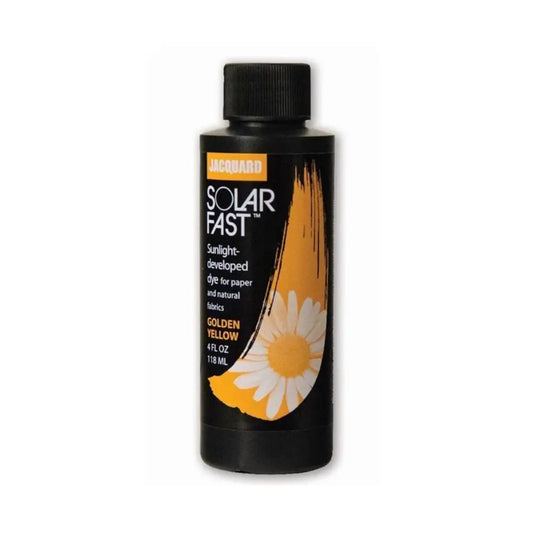
Jacquard Solarfast Dye
Regular price From $12.95Regular priceUnit price / perSale price From $12.95 -
-
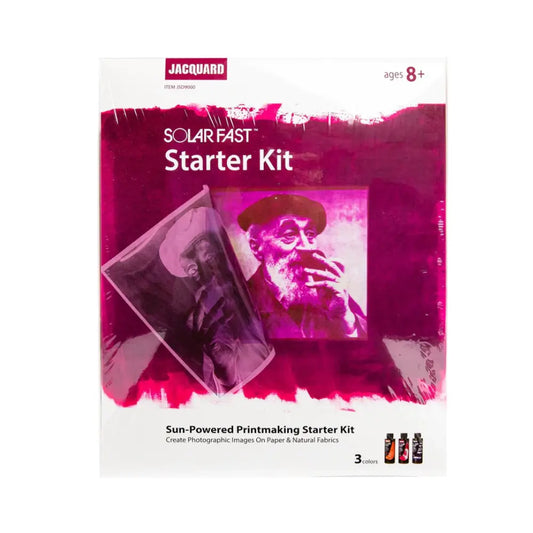
Jacquard Solar Fast Starter Kit
Regular price $79.95Regular priceUnit price / perSale price $79.95 -
-
-
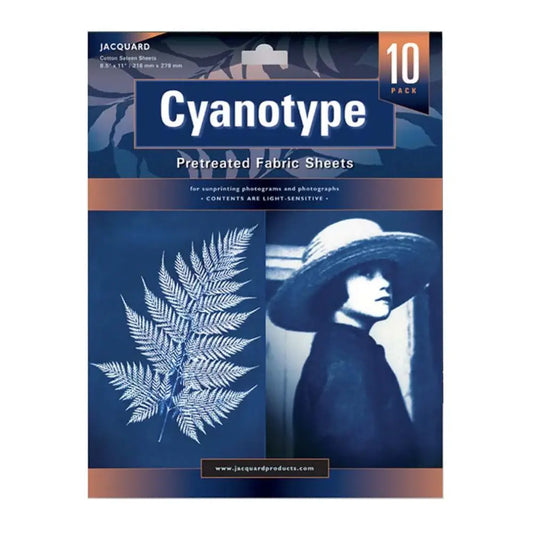
Jacquard Cyanotype Fabric Sheets
Regular price $69.95Regular priceUnit price / perSale price $69.95 -
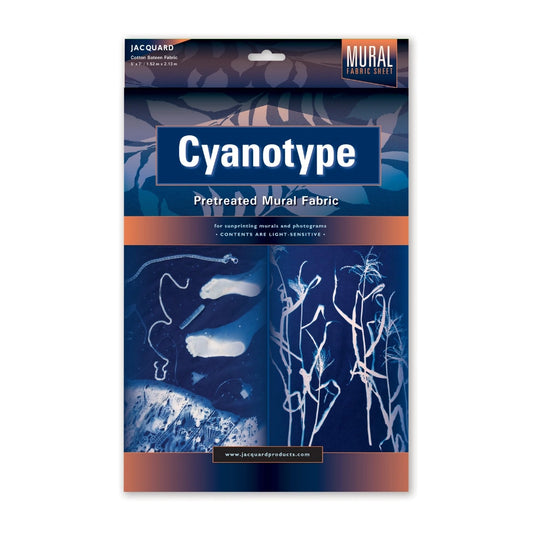
Jacquard Cyanotype Mural Sheet
Regular price $149.95Regular priceUnit price / perSale price $149.95 -
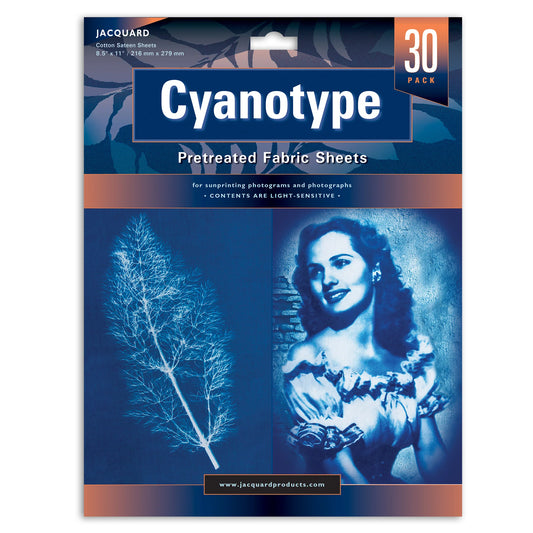
Jacquard Cyanotype Fabric Sheets 30pk
Regular price $139.95Regular priceUnit price / perSale price $139.95 -
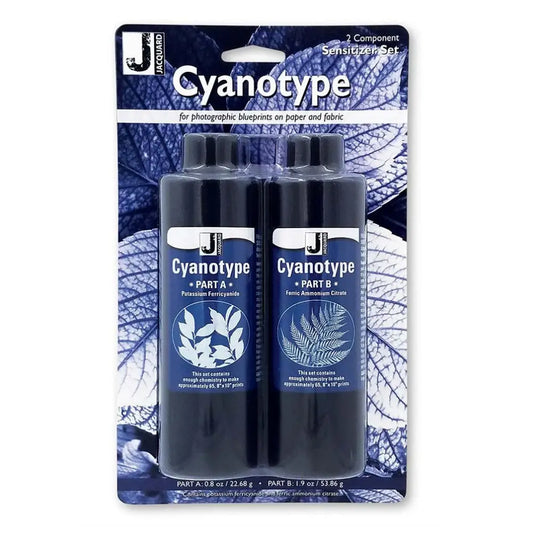
Jacquard Cyanotype Chemistry - Potassium Ferricyanide
Regular price $59.95Regular priceUnit price / perSale price $59.95 -
Jacquard Cyanotype Chemistry - Ferric Ammonium
Regular price $59.95Regular priceUnit price / perSale price $59.95
{"type":"root","children":[{"type":"heading","level":2,"children":[{"type":"text","value":"Frequently Asked Questions (FAQ)"}]},{"type":"paragraph","children":[{"type":"text","value":"What materials are needed to make a cyanotype?","bold":true},{"type":"text","value":"\n\nYou need a light-sensitive cyanotype solution (usually two chemicals mixed together), a surface such as paper or fabric, objects to place on the surface, and a source of UV light (sunlight works perfectly)."}]},{"type":"paragraph","children":[{"type":"text","value":"Do you need a camera to make a cyanotype?","bold":true},{"type":"text","value":"\n\nNo. Cyanotypes are camera-less images. They are created by placing objects directly onto the coated surface and exposing them to light."}]},{"type":"paragraph","children":[{"type":"text","value":"How long does exposure take?","bold":true},{"type":"text","value":"\n\nExposure time can vary depending on sunlight strength, but typically ranges from 5 to 20 minutes in direct sun. Cloudy conditions may require longer exposure."}]},{"type":"paragraph","children":[{"type":"text","value":"What happens after exposure?","bold":true},{"type":"text","value":"\n\nAfter exposure, the print is rinsed in water. This stops the chemical reaction and reveals the final image, with its characteristic blue tones."}]},{"type":"paragraph","children":[{"type":"text","value":"Can cyanotypes be made on surfaces other than paper?","bold":true},{"type":"text","value":"\n\nYes. Cyanotypes can be made on fabric, wood, and other absorbent materials, making the process popular for textiles and mixed media art."}]},{"type":"paragraph","children":[{"type":"text","value":"Why are cyanotypes blue?","bold":true},{"type":"text","value":"\n\nThe blue color comes from the formation of a pigment called Prussian blue during the chemical reaction triggered by UV light."}]},{"type":"paragraph","children":[{"type":"text","value":"Are cyanotype chemicals safe?","bold":true},{"type":"text","value":"\n\nCyanotype chemicals are generally considered low in toxicity when handled properly, but it’s still important to use gloves, avoid ingestion, and work in a well-ventilated area."}]},{"type":"paragraph","children":[{"type":"text","value":"Can you create detailed images with cyanotype?","bold":true},{"type":"text","value":"\n\nYes, especially when using transparent negatives (like printed images on acetate). However, using solid objects typically creates bold, silhouette-style compositions."}]},{"type":"heading","level":2,"children":[{"type":"text","value":"Interesting Facts About Cyanotype"}]},{"type":"paragraph","children":[{"type":"text","value":"Cyanotype was invented in 1842 by scientist and astronomer Sir John Herschel.\n\nIt is one of the oldest photographic printing processes still in use today.\n\nEarly botanist Anna Atkins used cyanotype to document plant specimens, creating one of the first photographic books ever published.\n\nThe process was historically used to create architectural blueprints—this is where the term “blueprint” comes from.\n\nCyanotypes can shift in color over time or be toned with natural substances like tea or coffee to create different hues.\n"}]},{"type":"paragraph","children":[{"type":"text","value":"The process works with any UV light source, meaning you can even create cyanotypes indoors with UV lamps.\n"}]},{"type":"paragraph","children":[{"type":"text","value":"Each cyanotype is unique—small variations in light, timing, and placement make every print one of a kind."}]}]}